



- Why spreads widen in the first place
- What an economic calendar actually tells you
- Scheduled releases and the spread widening window
- Liquidity gaps: the hidden reason behind wider spreads
- Execution expectations: what traders should realistically expect
- How to read a calendar with spread risk in mind
- Why news risk and spread risk are related but not identical
- Practical ways traders use calendars to prepare
- How broker comparison fits into the picture
- Common mistakes traders make around calendar events
- A simple pre-event checklist
- Using the calendar to compare expectations with reality
- Final thoughts
- Why spreads widen in the first place
- What an economic calendar actually tells you
- Scheduled releases and the spread widening window
- Liquidity gaps: the hidden reason behind wider spreads
- Execution expectations: what traders should realistically expect
- How to read a calendar with spread risk in mind
- Why news risk and spread risk are related but not identical
- Practical ways traders use calendars to prepare
- How broker comparison fits into the picture
- Common mistakes traders make around calendar events
- A simple pre-event checklist
- Using the calendar to compare expectations with reality
- Final thoughts
How Economic Calendars Help Traders Prepare for Spread Widening
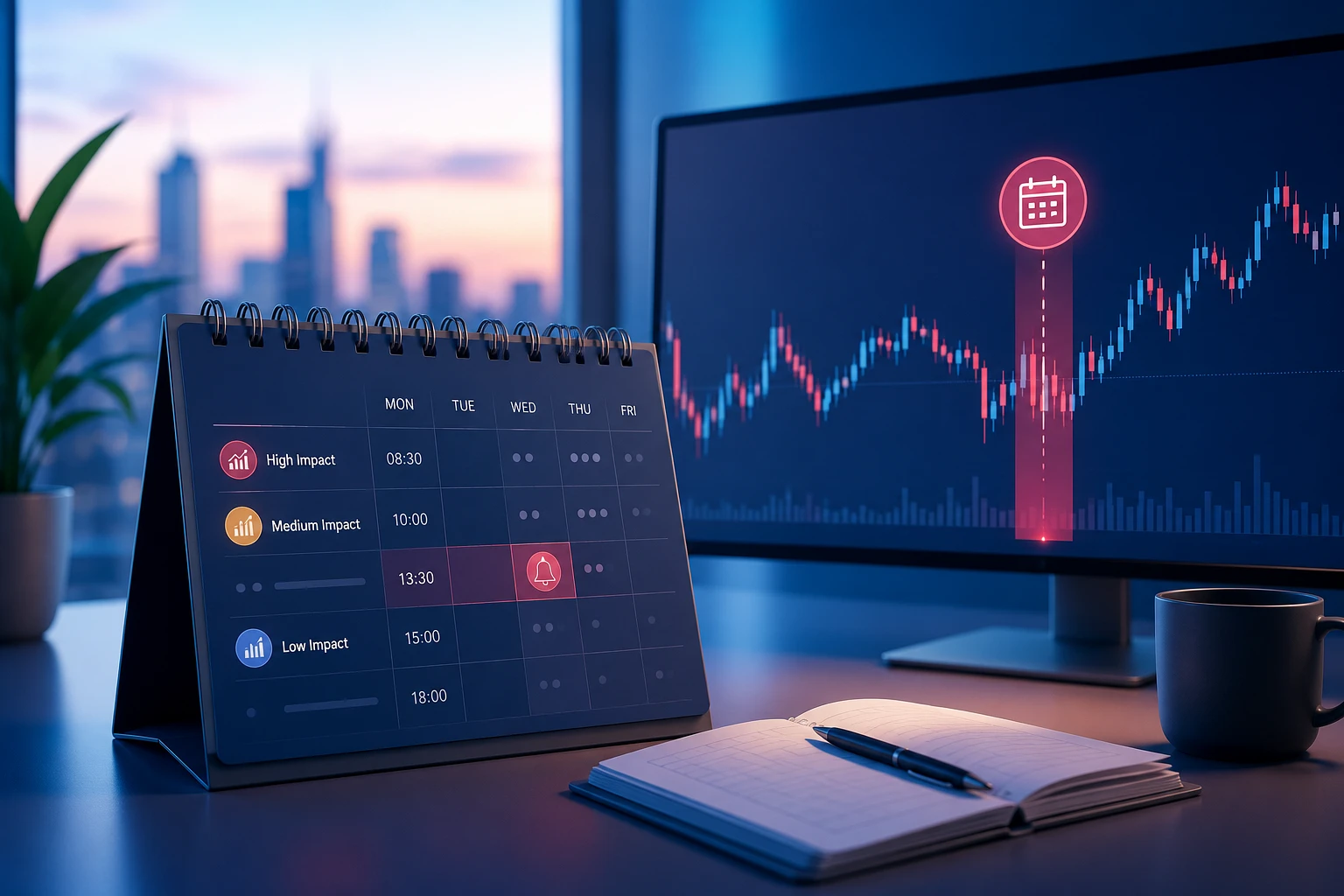


For retail Forex and CFD traders, spread widening is often the difference between a trade that behaves as expected and one that becomes unexpectedly expensive. It usually shows up around scheduled news releases, session transitions, or thin-liquidity periods when price can move faster than normal market depth can absorb. An economic calendar does not remove this risk, but it helps traders recognize when the conditions for wider spreads are more likely to appear.
This matters whether you are trading directly or comparing brokers and cashback conditions through services such as GlobeGain. A lower average spread is useful, but it is not the whole story. Execution quality, order handling, and what happens during high-impact events can matter just as much. Knowing how to read an economic calendar can help you better evaluate when spreads may expand and how your trading plan should account for that possibility.
Why spreads widen in the first place
The spread is the gap between the bid and ask price. In liquid, stable conditions, that gap is often relatively tight. When market conditions change, the spread can widen because liquidity providers become less willing to quote aggressively, order books thin out, or prices move too quickly for the available liquidity to keep up.
Spread widening is not only a Forex issue. It can affect many CFD markets, including indices, commodities, and metals. However, currencies are especially sensitive because major economic releases can quickly shift expectations about interest rates, growth, inflation, and central bank policy.
From a trader’s perspective, the important point is simple: a spread is not fixed by nature. It reacts to conditions. Economic calendars help you anticipate those conditions before they affect execution.
What an economic calendar actually tells you
An economic calendar is a schedule of upcoming market-moving events. It typically lists the time, country or region, event name, expected importance, and sometimes the forecast, previous reading, and actual release once it is published. Common examples include:
- central bank rate decisions
- inflation releases such as CPI
- employment reports
- GDP updates
- retail sales and manufacturing data
- speech times for central bank officials
- special events such as press conferences or testimony
The calendar is useful not because it predicts market direction, but because it shows when uncertainty and volatility may increase. Traders who understand this schedule can prepare for potential liquidity gaps and wider spreads before they appear on the screen.
Scheduled releases and the spread widening window
One of the most common times for spread widening is around scheduled releases. A high-impact event can create a short period in which many market participants are waiting for the same data point. Some traders reduce exposure before the announcement, while others cancel resting orders or pull quotes. That can temporarily reduce available liquidity.
When the release hits, the market may react in one of several ways. Sometimes price moves gradually. Sometimes it jumps sharply, with fast repricing across multiple venues. In either case, the spread can widen before, during, and just after the release because providers are trying to protect themselves from adverse selection and rapid price changes.
For the retail trader, the key lesson is timing. A calendar helps you recognize that the spread may start changing even before the actual number appears. In practice, the highest-risk zone is not always the exact second of the announcement. It can begin minutes earlier and persist for a while afterward, especially if the release is surprising or the market is already tense.
Liquidity gaps: the hidden reason behind wider spreads
Liquidity is what allows traders to enter and exit positions efficiently. When liquidity is abundant, there are more orders available near the current price, and spreads tend to stay tighter. When liquidity drops, the market may have difficulty matching buyers and sellers at the same price range, which often leads to a wider spread.
Economic calendars help you spot events that are likely to create liquidity gaps. These gaps can happen in several situations:
- just before a major release, when participants step aside
- during the first seconds after a data surprise
- between major sessions, especially around rollovers
- when a regional market is closed but a related currency or CFD is still trading
- around holidays or low-activity periods
Liquidity gaps do not always mean price will move in one direction. They mean the market may move in uneven steps rather than smooth increments. That is exactly the environment in which spreads often become less predictable.
Execution expectations: what traders should realistically expect
Economic calendars help set execution expectations in advance. That does not mean every release will lead to a problem. It means a trader should know that order behavior can differ from normal conditions.
During busy news windows, a market order may be filled at a less favorable price than expected, especially if the book is moving quickly. Pending orders can also be affected. A stop order may be triggered, but the resulting fill may differ from the level you saw on the chart. Limit orders may simply not get filled if price moves away too quickly. Even if your broker processes orders correctly, the market itself may not offer the same conditions it did ten minutes earlier.
This is why experienced traders pay attention to both the event itself and the time around it. The calendar is not just a list of news items. It is a planning tool for execution quality.
How to read a calendar with spread risk in mind
Not every calendar entry deserves the same attention. A practical approach is to focus on the event’s likely effect on liquidity and volatility rather than only the country flag or headline name.
1. Check the impact level
Many calendars mark events as low, medium, or high impact. High-impact items are more likely to produce spread widening, but medium-impact releases can matter too if the market is already sensitive or if multiple events cluster together.
2. Look at the timing, not only the event name
The most useful question is not “What is being released?” but “When exactly could spreads become less stable?” Some events cause a pre-release adjustment, a release spike, and a post-release digestion phase. All three can affect execution.
3. Review the forecast and previous value
The forecast and previous reading give context. If traders expect a large change or a key threshold to be tested, the event may attract more positioning before release. That can increase uncertainty and, sometimes, widen spreads earlier than expected.
4. Watch for event clusters
One isolated release is different from a packed session with several market-moving announcements. When multiple items appear close together, liquidity can remain fragile for a longer period.
5. Pay attention to speeches and press conferences
Not all calendar items are numeric releases. Central bank speeches, Q&A sessions, and press conferences can be just as important because they can shift expectations without a fixed outcome. Markets often reprice quickly when language changes.
Why news risk and spread risk are related but not identical
Many traders think of news risk as price volatility alone. In reality, spread widening is a separate but connected risk. Price can be volatile without spreads becoming extreme, and spreads can widen even when the chart looks relatively calm.
For example, a market may drift quietly in the hours before a release while the order book becomes thinner. The chart might not yet show dramatic movement, but the spread can already be less stable. Conversely, a release can produce a sudden spike with only brief widening if enough liquidity remains available. The economic calendar helps you plan for both possibilities by showing when the market may change character.
Practical ways traders use calendars to prepare
Using a calendar well is less about predicting and more about preparing. A few simple habits can make spread risk easier to manage.
- Mark the event window in advance. Do not wait until the headline appears. Identify the time when spreads may begin to change and decide how you want to behave before that moment arrives.
- Know which instruments are most sensitive. A U.S. inflation release may matter more for USD pairs, Treasuries-linked CFDs, or indices with rate sensitivity than for unrelated markets.
- Expect different behavior across sessions. The same release can have a different effect depending on whether London, New York, or Asia is active. Liquidity depth varies by session.
- Check whether your pending orders need adjustment. If you rely on stops or limits, consider how a fast market could affect trigger and fill quality.
- Observe spread behavior on a demo or small scale first. This helps you learn your broker’s typical execution pattern during news without assuming all venues behave the same way.
How broker comparison fits into the picture
When traders compare brokers, they often focus on average spreads, commissions, and cashback offers. Those are useful comparisons, but they should not be separated from execution conditions. A broker that looks inexpensive during calm periods may still behave differently when liquidity thins out around scheduled releases.
This is where an educational comparison approach can help. If you use a service like GlobeGain to compare brokers or cashback conditions, the goal should be to understand the full trading environment, not just the advertised cost. Ask practical questions such as: How does the broker handle volatile periods? Are spreads variable? Are execution conditions transparent around news? Is the cashback structure meaningful if slippage or spread expansion offsets the savings?
In other words, low trading costs matter, but so does how those costs behave when markets become less orderly. Economic calendars help you evaluate that question in real time.
Common mistakes traders make around calendar events
Spread widening becomes more painful when traders underestimate it. A few common mistakes are worth avoiding.
- Ignoring smaller releases that still affect a specific pair. A medium-impact event can matter if it relates directly to the currency or market you trade.
- Assuming the actual release time is the only risk point. Liquidity can change before and after the headline.
- Leaving order sizes unchanged during high-risk windows. Larger orders may be more difficult to fill efficiently when the book is thin.
- Confusing calm price action with stable conditions. The chart can look quiet while spreads quietly deteriorate.
- Relying on one broker’s normal conditions as a permanent standard. Execution can vary by venue, account type, and market phase.
A simple pre-event checklist
Before a high-impact calendar event, it helps to ask a short series of questions:
- Is this release likely to affect the instrument I am watching?
- What time does the event occur in my trading session?
- Is there a press conference or follow-up speech?
- Have I seen spreads widen around similar events before?
- Do I understand how my broker typically handles orders during fast markets?
- Would I still be comfortable with the trade if spreads widened temporarily?
This checklist does not create a forecast. It simply turns the economic calendar into a planning tool rather than a decorative schedule.
Using the calendar to compare expectations with reality
One of the most educational uses of an economic calendar is post-event review. After a release, traders can compare the expected impact with the actual spread behavior. Did the spread widen before the headline? Did it normalize quickly or remain elevated? Was slippage noticeable? Did one instrument react more than another?
Over time, this habit helps traders build a more realistic sense of execution expectations. It also makes broker comparison more meaningful. You are no longer asking only which broker advertises the tightest spread. You are asking which broker’s trading conditions remain understandable when markets become active.
Final thoughts
Economic calendars are valuable because they turn surprise into preparation. They help traders identify when scheduled releases may create liquidity gaps, when spreads are more likely to widen, and when execution may deviate from normal expectations. For retail Forex and CFD traders, that knowledge is practical risk awareness.
The best use of a calendar is not to chase news, but to recognize the conditions under which normal trading assumptions may no longer hold. That is especially important when comparing brokers or evaluating cashback conditions, because trading costs during calm periods do not tell the full story.
Risk reminder: spread widening, slippage, and rapid price changes can increase trading costs and make order fills less predictable, especially around scheduled economic releases. Trading CFDs and Forex involves risk, and past execution conditions do not guarantee future results.